President’s Message
 Distributed Wind 2026: Charging Ahead was a great success. Highlights were Peter Asmus’s keynote on microgrids and VPP’s, sessions on new members, hybrid systems, DWEA’s policy agenda, the latest IRS tax credit guidance, and the Tuesday afternoon DOE labs and industry discussions on R&D gaps and opportunities. Once again, we hosted a number of students under the Repowering Schools Program.
Photos and slide decks from DW26 are now posted on DWEA’s website
(www.distributedwind.org). Special thanks go out to the DW26 program Co-Chairs Jim Duffy, Ryan Storke, and Brett Pingree and to Heather Rhoads, David Dunaway, and Sonja Ling with eFormative Options for their organizational support.
DWEA’s February 2026 Lobby Day was also a great success, with more than 40 participants and 60+ Hill meetings. DWEA members took our policy priorities on USDA grants, tax credits, and DOE R&D funding to members of important House and Senate committees and the staff of those committees. Participants reported overwhelming support for distributed wind and DWEA’s priorities and a growing frustration with the frictions and impediments the Trump administration has imposed over the last year. Special thanks to Sonja Ling of eFormative Options for the huge task of spearheading Lobby Day coordination.
The 2026 DWEA Board and Officers elections were held over the last 6 weeks. Previous DWEA Vice President Trudy Forsyth and Treasurer Padma Kasthuri decided not to run for reelection, and we thank them for their many years of service to DWEA. The membership reelected myself and returning Board members Jim Duffy of Nixon Peabody; Ken Kotalik of Northern Power; and Brett Pingree of EWT.
Newly elected DWEA Board members are Erika Boeing of Accelerate Wind; Becky Petit of HSI Solar; Rocky McIntosh of Sonsight; and Megan Amsler of Self Reliance. Additional DWEA Board members are listed on DWEA’s website. The new 19-member Board elected 2026-2027 officers: myself, Mike Bergey as President; Jim Duffy as Vice-President; Ian Brownstein as Secretary; and Ken Kotalik as Treasurer.
Momentum: I also want to acknowledge Lloyd Ritter’s hard, hard work and success in getting an Underutilized Technologies reserve fund for USDA REAP grants in the House Farm Bill. This was a very big win for the distributed wind industry.
Member News
Northern Power Systems’ Electrical Certification to UL 1741 SB Opens New Doors for the NPS 100C
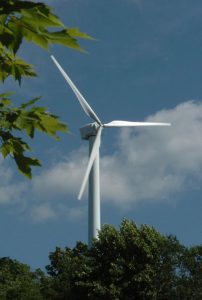 After 18 months of dedicated design, engineering and testing, Northern Power Systems (NPS) announced on February 3, 2026, that its NPS 100C wind turbine successfully obtained UL 1741 Supplement B (UL 1741 SB) certification. This upgrade ensures compliance with the IEEE 1547-2018 standard, enabling distributed energy resources to actively support grid stability with advanced features including Volt-VAR and ride-through capabilities.
This certification positions NPS among the very first distributed wind manufacturers with a UL-1741 SB certified converter specifically engineered for its wind turbines. The newly certified NPS 100C is designed to meet strict, modern grid-code regulations, allowing for faster, easier utility interconnection across the U.S. The converter handles voltage/frequency ride-through, Volt-VAR control, and frequency-watt response, preventing system disconnections during disturbances.
For NPS partners, developers, utilities and current customers interested in upgrade capability, this means fewer interconnection barriers, increased uptime (availability) and related return on investment. This certification also translates into long-term regulatory resilience and improved reliability over the 20+ year design life of the wind turbine.
The certification project was completed by Northern Power Systems’ U.S. subsidiary, with significant funding support from the National Laboratory of the Rockies (NLR, formerly NREL) through its Competitiveness Improvement Project (CIP) program; as well as technical and testing automation support from DER Security. Thank you to both NLR and DER Security!
This upgrade shifts the NPS 100C from simple grid interaction to active grid support, essential for high renewable penetration across the U.S. and Worldwide. For more information see related posts: NPS Website | LinkedIn
Member Spotlight: Ryan Storke on “Badass Businesses”
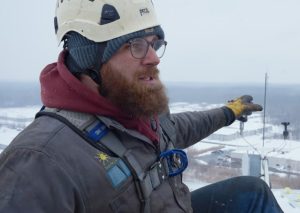 “Badass Businesses” recently released a video featuring wind technician and Storke LLC CEO Ryan Storke, who trains host Dakota Stark in tower climbing, rescue procedures, and turbine mechanics before taking him 220 feet up a live turbine for an emergency rotor-lock repair and annual maintenance. The episode showcases how Ryan’s 6-person team manages and maintains roughly 500 turbines across the Northeast while operating a high-risk repair business that keeps distributed wind projects safely online. Watch the full video on YouTube.
DW Sector News
Sandia National Laboratories Advances DW through AI-Driven Power Management Controls
As the energy landscape continues to evolve, Sandia National Laboratories is at the forefront of advancing distributed wind (DW) energy technologies. With a focus on enhancing grid resilience, affordability, reliability, and security, Sandia researchers are leveraging artificial intelligence (AI) to develop innovative solutions that integrate DW resources into modern electric grids. Funded by the Wind Energy Technology Office (WETO), Sandia has combined AI, real-time simulation, and field-validated controls to support power management and system integration of DW.
Enabling Grid Services for Distributed Wind: The integration of DW energy into the grid presents unique challenges, particularly in managing the variability of generation and load. These variations can cause voltage fluctuations that can cause equipment damage, reduced efficiency, increased energy losses, and even widespread power outages, compromising the reliability of the electrical grid and the safety of critical services.
Sandia’s research team has developed an AI-driven Distributed Energy Resource Management System (DERMS) that simplifies the complexities of modern grid management. This system forecasts load and generation, optimizes reactive power dispatch from distributed energy resources (DERs), and autonomously responds to disturbances in real time, ensuring a reliable and secure energy supply.
“Our goal is to create an intelligent power management system that utilities of all sizes can deploy,” said Rachid Darbali-Zamora, project lead. “Leveraging AI allows us to create a power management system that learns and adapts to the specific needs of the user, enabling more effective use of DW resources within the complexities of a modern distribution grid. This approach not only improves voltage regulation, but also enhances reliability and contributes to the affordability of energy by optimizing resources.”
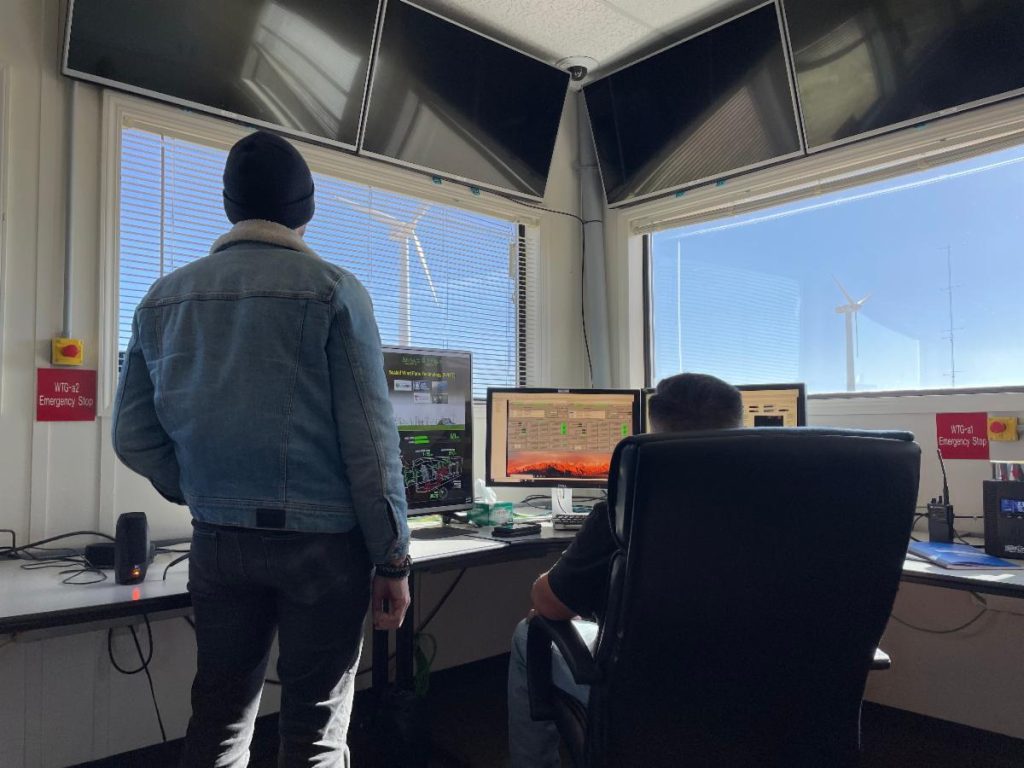
Incorporating Distributed Wind Participation into Power Management: Sandia’s DERMS technology is designed to facilitate the participation of DW resources in power management strategies, focusing on voltage regulation. The AI-driven power management system is able to correct voltage deviations by coordinating the reactive power produced by DW power converters with other DERs, ensuring enhanced reliability against potential disruptions. The research team conducted extensive testing at Sandia’s Distributed Energy Technology Laboratory (DETL), where they validated the AI algorithms using real commercial power converters under realistic grid conditions.
The experimental results demonstrated that the AI-driven controls could effectively manage voltage deviations and fluctuations from variable sources by managing reactive power from their power electronics, ensuring a stable and resilient grid. Enhanced grid resilience is a key benefit of this technology. The DERMS can bolster the resilience of the electric grid by improving the management of DERs. A more resilient grid can better withstand disruptions, ensuring a stable energy supply that supports domestic industries and businesses, thereby maintaining operational continuity and reducing potential losses.
Deploying AI-Driven Coordination with Other Generation Types: In addition to optimizing DW resources, Sandia’s DERMS technology also integrates other
inverter types. Field demonstrations at Sandia’s Scaled Wind Farm Technology (SWiFT) facility and the Texas Tech University (TTU) Global Laboratory for Energy Asset Management (GLEAMM) microgrid showcased the system’s ability to manage active and reactive power in real time, improving energy use and power quality.
At the TTU GLEAMM microgrid, which supports a critical data center, the AI-driven DERMS ensured improved voltage performance during fluctuations in energy supply and demand. This demonstration was conducted in collaboration with South Plains Electric Cooperative (SPEC), highlighting the importance of partnerships in advancing distributed energy technologies.
“Our technology not only safeguards the operational integrity of critical facilities but also contributes to the overall resilience of the grid,” said Miguel Jimenez-Aparicio. Moreover, DERMS can quickly adjust to fluctuations in energy demand by optimizing the dispatch of local energy resources. This responsiveness can help domestic manufacturers and businesses maintain production schedules without interruption, improving overall supply chain efficiency.
The speed to power is another critical advantage of this technology, as it enables faster
integration of generation into the grid, helping bring more power online quickly, enhancing the overall capacity and responsiveness of the grid. The full Sandia team that participated in the field demonstration consisted of Rachid Darbali-Zamora, Miguel Jimenez-Aparicio, Jon Berg, Brandon Davis, Johnny Luevano, Miguel Hernandez, as well as Argenis Bilbao from TTU, and Brandon Loth from South Plains Electric Cooperative (SPEC).
Looking Ahead, Energy I-Corps and Commercialization: Recognizing the potential impact of their work, Sandia’s project team participated in the DOE’s Energy I-Corps program, engaging with utilities and industry partners to refine their technology and transition pathways. The strong demand for intelligent tools that simplify DER management has led to the project’s acceptance into Energy I-Corps Phase III, aimed at accelerating commercialization and supporting field deployment.
Sandia National Laboratories is a multi-mission laboratory operated by National Technology and Engineering Solutions of Sandia LLC, a wholly owned subsidiary of Honeywell International Inc., for the U.S. DOE’s National Nuclear Security Administration. Sandia Labs has major research and development responsibilities in nuclear deterrence, global security, defense, energy technologies and economic competitiveness, with main facilities in Albuquerque, New Mexico, and Livermore, California.
– Rachid Darbali-Zamora, Sandia Labs
PNNL commences annual DW data collection
 The Pacific Northwest National Lab is welcoming distributed wind project installation, sales, incentive, and generation data reflective of the year 2025 to support the annual Distributed Wind Energy Technology Data Update.
The Data Update provides a comprehensive overview of the distributed wind market and helps to guide future investments, market opportunities, and research and development needs. Please check your inboxes for PNNL’s annual data request email or check out their quick and easy online form to report 2025 installations. Thank you!
DW Events Calendar
DWEA Member Meetings:
- Apr 7, May 19: Midsize Committee Meetings
- Apr 16, May 21, Jun 18: Federal Policy Updates & Service Provider Zooms
- Apr 22, May 27, Jun 24: State Workgroups Check-In
- May 13, Jun 10: DW Communications Meetings: Profiles and Case Studies
For Zoom links, calendar items, and to sign up for DWEA member work groups, contact heather@distributedwind.org
AgWind Advances
 ✅ Opt in to AgWind outreach: We encourage landowners to enter their site info for screening & engagement here and enter prize drawings for DWEA’s NEW metal lapel pins!
✅ Additional Resources:
- AgWind Tool – request login from: help@agwindenergy.org
- AgWind User Guide | Free Site Evaluation form
- Webinar Recordings: Access AgWind Assistance
- USDA State Energy Coordinators
- USDA REAP Program Information (Currently only accepting guaranteed loan applications)
Join DWEA’ s AgWind Team for our Monthly Open Office hours available from 11-Noon Pacific / 2-3 pm ET on the 3rd Friday of every month.
DWEA Members are encouraged to submit news about new products, services, and projects, including photos, to the DWEA newsletter editor at dweacomm@gmail.com
The deadline for our next Bimonthly Bulletin for July 2026 is June 15, 2025.
To add employees or colleagues to DWEA’s distribution list, subscribe them here